Loading...

Government Programs in the U.S. You Should Know About

Update 2026: New Eligibility Rules Applied – Government Programs

Don't Leave Money on the Table. Claim Your US Government Benefits.

Anúncios

card
Millions of Americans qualify for financial assistance but never apply because the process seems too complicated. Our comprehensive, jargon-free guide breaks down exactly what you qualify for and how to get it—fast.
Access the Free Guide Now
100% Free Information. You'll remain in this website.
Millions of Americans qualify for financial assistance but never apply because the process seems too complicated. Our comprehensive, jargon-free guide breaks down exactly what you qualify for and how to get it—fast.
card
Access the Free Guide Now
100% Free Information. You'll remain in this website.
We've compiled everything you need to know into one easy-to-read, comprehensive article. No complicated legal terms, just straight facts on how to get the help you deserve.
🏠 Housing & Rent: Keep a secure roof over your head with programs designed to stop evictions.
🏥 Healthcare: Medical debt is a leading cause of bankruptcy. Shield your family with covered care.
🛒 Food & Nutrition: Learn how to secure an EBT card for your family's daily meals
💡 Utilities & Cash: Stop shut-offs and get direct cash assistance to cover the gaps in your budget.
Access the Free Guide Now
100% Free Information. You'll remain in this website.

Why You Might Be Missing Out

Facing financial hardship is incredibly stressful. When you’re constantly worrying about basic things—like putting food on the table, paying rent, going to the doctor, or keeping the lights on—it can feel like you’re carrying the weight of the world.

But here is the truth that many people don’t realize: you don’t have to be completely unemployed to qualify for government help. A massive percentage of individuals receiving assistance are considered the “working poor.” They work hard, sometimes multiple jobs, but the cost of living is just too high to cover everything.

⚠️ The Bureaucracy Trap The biggest barrier keeping families from their benefits isn’t eligibility—it’s the paperwork. The system is notoriously complex. Our guide was created specifically to translate the bureaucratic jargon into plain English, saving you hours of frustration.

Many people hesitate to apply because they fear it will ruin their credit or affect their future. This is a myth. Receiving standard assistance like SNAP (food stamps) or Medicaid is strictly confidential. It does not appear on your credit report, and it will not prevent you from getting a loan or buying a house later. It is simply a temporary stabilizer to protect your family’s well-being.

Ready to Take Control of Your Financial Future?

We’ve compiled everything you need to know into one easy-to-read, comprehensive article. No complicated legal terms, just straight facts on how to get the help you deserve.

“Your Guide to the U.S. Safety Net: Getting Help When Money is Tight”

Read the Full Guide Now  ➝

Reading time: ~8 minutes.

Potential value: Thousands of dollars in saved expenses.

Totally free. No paywalls. No sign-ups required.

Real People, Real Relief: Stories from the Safety Net

It is easy to look at government programs as just acronyms and paperwork. But behind every program are real families who found themselves in impossible situations, forced to make choices no one should have to make. Here is how taking that single step to apply changed the course of four different lives.

“I used to drink a glass of water for dinner so my kids could eat.”

How SNAP Brought Dignity to a Working Mother

For Jessica, a single mother working 40 hours a week as a receptionist, the hardest part of the week wasn’t her job—it was the grocery aisle. Despite working full-time, the math simply didn’t work.

After rent and childcare, she was left with $40 a week for food. She started skipping dinners, drinking a glass of water instead, just to make sure her two kids could have a full plate.

The turning point came when she finally applied for SNAP. Within weeks, she received her EBT card.

The first time she filled her cart with fresh apples, milk, and chicken—without mentally calculating every single penny in panic—she cried in the parking lot. SNAP didn’t just feed her family; it gave her dignity back.

“I didn’t have to tell my kids we were sleeping in the car.”

Stopping an Eviction with Housing Assistance

Marcus had always prided himself on being the provider. But when the factory where he worked as a mechanic suddenly cut everyone’s hours, his income was slashed in half.

He burned through his modest savings trying to keep up, but by the third month, the dreaded pink eviction notice was taped to his apartment door. The fear of his family ending up in a homeless shelter was paralyzing.

A local community center helped him navigate an emergency rental assistance program and apply for a Section 8 housing voucher.

The relief wasn’t just financial—it was the profound, heavy exhale of knowing his children wouldn’t have to change schools and sleep in a car. The safety net caught them right before they hit the ground.

Recommended Content
card

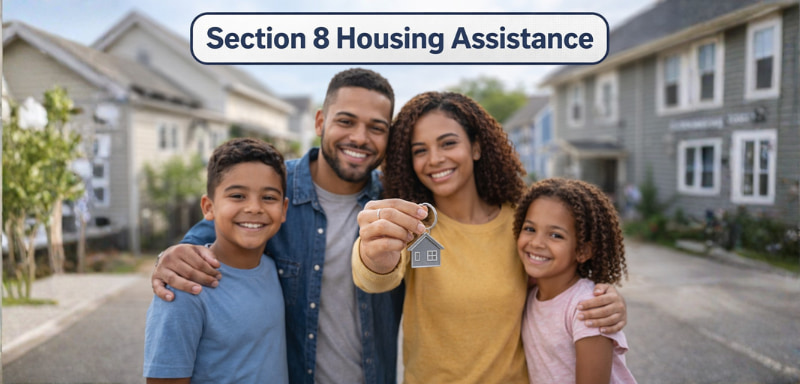
Section 8: A Complete Guide to Housing Choice Vouchers in the United States

What is Section 8? Discover eligibility rules, waiting lists, and how to apply for affordable housing assistance in the U.S.

“I ignored an agonizing cough because I was terrified of the medical bill.”

Escaping a $15,000 Debt Through Medicaid

Linda is a freelance graphic designer. She makes enough to cover her bills, but private health insurance was entirely out of her budget.

When a persistent, agonizing cough refused to go away, she ignored it for months, terrified that a doctor’s visit would lead to a medical bill she couldn’t pay.

It wasn’t until she collapsed at her desk that she learned she had severe pneumonia. Because her income was below the state threshold, a hospital social worker helped her apply for Medicaid retroactively.

Medicaid covered her entire hospital stay and her follow-up medications. Without it, Linda would have faced over $15,000 in medical debt—a financial death sentence that would have forced her into bankruptcy.

“We wore winter coats indoors to afford my wife’s heart medication.”

Surviving a Brutal Winter on a Fixed Income with LIHEAP

Arthur and Helen are in their late seventies, living entirely on a fixed Social Security income. Last winter was historically brutal, but the thermostat in their modest home never went above 58 degrees.

Young couple managing their finances with laptop and documents in a modern kitchen setting.

They were wearing winter coats and double socks indoors, choosing to freeze rather than turn up the heat, because higher utility bills meant they wouldn’t be able to afford Helen’s heart medication.

A neighbor noticed their struggle and told them about LIHEAP (Low Income Home Energy Assistance Program). The program stepped in, paid their past-due winter heating bills, and provided an ongoing credit.

For Arthur and Helen, government assistance wasn’t about luxury; it was literally about survival and staying warm in the final chapter of their lives.


Frequently Asked Questions

No! This is a very common misconception. Many programs, including SNAP and Medicaid, are based on your income relative to your household size, not your employment status. Many full-time workers qualify for assistance.

Absolutely not. Receiving government assistance like food stamps, housing vouchers, or Medicaid is strictly confidential. It is never reported to credit bureaus and has zero impact on your credit score or ability to get loans in the future.

Yes, and you should! These programs are designed to overlap. If you qualify for food assistance, you very likely qualify for utility assistance. In many states, you can apply for multiple benefits using a single unified application form online.

Think of it this way: Medicare is primarily based on age (available to most people 65 and older) or specific severe disabilities, regardless of your income. Medicaid, on the other hand, is an income-based assistance program designed for individuals and families with limited financial resources, regardless of age.

Not at all. SNAP is designed to help low-wage workers, part-time employees, and seniors on fixed incomes. Eligibility is based on your household size and your income relative to the federal poverty level. Many families who work full-time still qualify for a monthly grocery allowance.

SNAP is exclusively for food you take home and prepare. You can buy fruits, vegetables, meat, dairy, breads, and even seeds to grow your own food. However, you cannot use SNAP to buy alcohol, tobacco, vitamins, pet food, household supplies (like soap or paper towels), or hot, ready-to-eat foods at the store.

No. While WIC (Women, Infants, and Children) provides vital infant formula support, it also provides specific, highly nutritious foods for pregnant women, breastfeeding mothers, and children up to age 5. This includes items like milk, eggs, whole grains, peanut butter, cereal, and fresh produce.

Unlike SNAP or Medicaid, which usually process within 30 days, Section 8 (Housing Choice Vouchers) has a notoriously long waiting list. Depending on your city, wait times can be several months to several years. If you need immediate shelter, you should look into emergency rental assistance, eviction diversion programs, or local shelters while you wait for your Section 8 application.

While LIHEAP (Low Income Home Energy Assistance Program) is famous for stopping winter shut-offs, it also helps with summer cooling bills (air conditioning) in many states, especially in regions with extreme heat. It can also help cover the cost of weatherizing your home to make it more energy-efficient year-round.

No. Safety net programs like TANF (Temporary Assistance for Needy Families), SNAP, and LIHEAP are grants, not loans. As long as you were truthful on your application and legitimately qualified when you received the funds, you never have to pay the money back.

DISCLAIMER: This website is not affiliated with any government agency or DHS program. We provide informational content only. For official and updated details, please refer to the official government website.


Disclaimer

Under no circumstance we will require you to pay in order to release any type of product, including credit cards, loans or any other offer. If this happens, please contact us immediately. Always read the terms and conditions of the service provider you are reaching out to. We make money from advertising and referrals for some but not all products displayed in this website. Everything published here is based on quantitative and qualitative research, and our team strives to be as fair as possible when comparing competing options.

Advertiser Disclosure

We are an independent, objective, advertising-supported content publisher website. In order to support our ability to provide free content to our users, the recommendations that appear on our site might be from companies from which we receive affiliate compensation. Such compensation may impact how, where and in which order offers appear on our site. Other factors such as our own proprietary algorithms and first party data may also affect how and where products/offers are placed. We do not include all currently available financial or credit offers in the market in our website.

Editorial Note

Opinions expressed here are the author's alone, not those of any bank, credit card issuer, hotel, airline, or other entity. This content has not been reviewed, approved, or otherwise endorsed by any of the entities included within the post. That said, the compensation we receive from our affiliate partners does not influence the recommendations or advice our team of writers provides in our articles or otherwise impact any of the content on this website. While we work hard to provide accurate and up to date information that we believe our users will find relevant, we cannot guarantee that any information provided is complete and makes no representations or warranties in connection thereto, nor to the accuracy or applicability thereof.