Anúncios
Your Guide to the U.S. Safety Net: Getting Help When Money is Tight
Going through tough financial times is incredibly stressful, right? When you’re constantly worrying about basic things—like paying rent, or keeping the lights on—it can feel like you’re carrying the weight of the world!
But hey, it’s really important to remember that unexpected job losses, medical emergencies, or just a rough economy can happen to absolutely anyone. Because life throws curveballs, the U.S. government has set up a safety net to help out.
Financial Hardship Relief
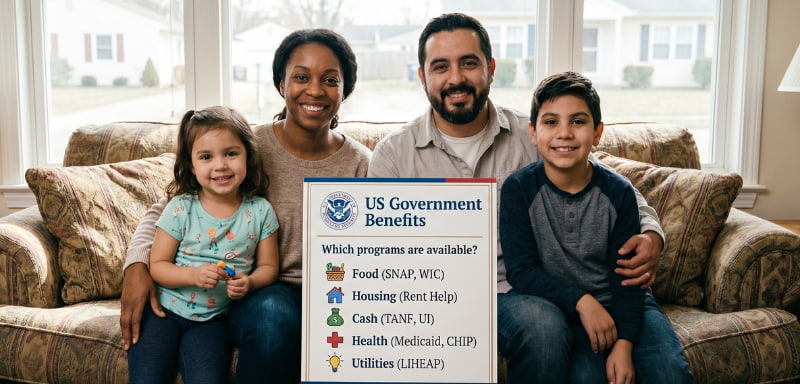
GOVERNMENT PROGRAMS
This guide is here to break down the many government programs out there for folks dealing with financial stress.
These programs, run by federal, state, and local agencies, are designed to give you some temporary breathing room, stabilize your family, and help you get back on your feet.
Once you know what’s out there and how to apply, you can start taking back control of your finances!
Anúncios
How Government Assistance Actually Works
Before we dive into the specific programs, let’s talk about the big picture. These programs aren’t meant to replace a full-time paycheck or pay for a fancy lifestyle.
Instead, they act as a crucial safety net to stop the worst parts of poverty, like homelessness or going hungry.
Usually, the funding starts at the federal level, but your state or local county office handles the actual benefits.
Anúncios
This means that while the main goal of a program is the same everywhere, the exact rules, applications, and even the program names might look a bit different depending on where you live.
Basically, the government sees these programs as an investment in our communities. By helping you cover critical bills today, they’re hoping to build a healthier, stronger society for tomorrow!
🛒 Putting Food on the Table: Nutrition Programs
Not having enough to eat is one of the scariest parts of financial trouble. To help out, the government has some great programs to make sure millions of Americans get the nutrition they need.

SNAP (Supplemental Nutrition Assistance Program)
You might still hear people call this “food stamps,” but SNAP is the main way the country helps with food. Today, it works just like a regular debit card using an Electronic Benefit Transfer (EBT) card.
SNAP gives you a monthly allowance to buy groceries at approved stores, supermarkets, and even a lot of farmers’ markets! It’s designed to help stretch your food budget so you can buy essentials like fruits, veggies, meat, and dairy.
Just keep in mind, you can’t use SNAP for non-food items, alcohol, or hot, ready-to-eat meals.
WIC (Women, Infants, and Children)
WIC is super focused on helping a specific group: pregnant women, new moms, and kids up to age five. Good nutrition is so important for little ones, so WIC does more than just hand out funds.
It gives you a specific package of healthy foods (like cereal, milk, eggs, and baby formula). Plus, WIC offers nutrition advice, breastfeeding support, and can even point you toward good pediatricians!
Emergency Food Help
Besides SNAP and WIC, the government also supports local food banks, pantries, and soup kitchens through the Emergency Food Assistance Program (TEFAP).
These places are fantastic for quick, short-term help without the long application process, making sure nobody goes to bed hungry during a sudden crisis.
🏡 Keeping a Roof Over Your Head: Housing Help
Housing is usually the biggest bill we have. When money gets tight, the fear of eviction or losing your home is very real. Luckily, housing programs are here to ease that worry.
Section 8 (Housing Choice Vouchers)
This is the main federal program to help low-income families, seniors, and folks with disabilities afford safe housing in the private market. Instead of making you move into a specific public housing complex, Section 8 gives you a voucher. You find your own place (as long as it meets safety standards) and pay a chunk of your income toward rent, while the local housing agency pays the rest right to your landlord!
Emergency Rental Assistance
When the economy hits a rough patch, emergency rental assistance programs step in to help stop evictions. These funds usually come through your state or county and can clear up past-due rent, cover upcoming rent for a bit, or even help with tied-in utility bills. The main goal here is to keep you in your home, which is better for everyone!
Affordable Housing and Shelters
If you need immediate shelter or long-term affordable living, local governments run public housing where your rent is based on your income. There’s also a whole network of emergency shelters out there to keep you safe if you’ve lost your home, and they can help connect you to more permanent housing, too.
👨💼 Between Jobs? Unemployment Insurance
Losing your job when it’s not your fault—like if your company downsizes or the economy shifts—can completely flip your life upside down. Unemployment Insurance (UI) is a joint state-federal program that gives you a temporary income boost while you hunt for a new gig.
To qualify, you need a solid work history and must have lost your job through no fault of your own (so, quitting or getting fired for bad behavior usually won’t cut it). Once you’re approved, you get a weekly payout that replaces a portion of your old paycheck.
Just remember, you have to stay active! You’ll need to look for work, log your job hunt, and accept reasonable job offers. This program is a lifesaver for families and helps keep the whole economy moving during tough times.
Direct Cash Help: Welfare (TANF)
Sometimes, food vouchers or rent help just don’t cover everything. You still need to buy clothes, gas, and basic hygiene stuff!
TANF (Temporary Assistance for Needy Families)
Often just called “welfare,” TANF gives states money to run cash assistance programs for low-income families with kids. The main goal of TANF is to help you become self-sufficient.
Because of this, TANF has strict time limits (often up to 60 months in your lifetime, though some states are shorter) and usually requires you to work, train for a job, or volunteer to get the monthly cash. Knowing that finding work can be tough, many states also use TANF funds to help pay for child care and transportation so you can actually get to work!
🩺 Staying Healthy: Healthcare Programs
A surprise medical bill can wipe out anyone’s savings, and it’s even scarier when money is already tight. The government runs some massive insurance programs to make sure everyone can get the care they need.

Medicaid
Medicaid provides free or super cheap health coverage to millions of folks, including low-income adults, kids, pregnant women, seniors, and people with disabilities. Since states run it, the exact rules and covered services change depending on your zip code. But generally, it covers the big stuff: hospital stays, doctor visits, check-ups, and prescriptions!
CHIP (Children’s Health Insurance Program)
Sometimes, working families make a little too much for Medicaid but still can’t afford private insurance. CHIP steps right into that gap! It gives low-cost coverage to kids in this exact situation, making sure they get their check-ups, shots, dental work, and eye exams.
Medicare
While it’s mostly known as the health program for folks 65 and older, Medicare also covers some younger people with severe, long-term disabilities. It covers hospital stays, standard medical care, and prescription drugs.
💡 Keeping the Lights On: Utility Help
A home needs more than just paid rent; you need electricity, heat, and these days, internet access! When bills pile up, shut-offs can make things pretty miserable.
LIHEAP (Low Income Home Energy Assistance Program)
LIHEAP helps low-income households handle their home energy bills. Extreme weather is no joke, so LIHEAP gives grants to help heat your home in the freezing winter or cool it during blistering summer heatwaves. They even help weatherize homes—like fixing old heaters or adding insulation—so your bills stay lower in the future!
The Lifeline Program
Having a phone and internet isn’t a luxury anymore; you need them to find jobs or call a doctor. The Lifeline program gives a monthly discount on your phone and internet bills so you can stay connected to the world.
How to Actually Apply for Help
Knowing these programs exist is great, but dealing with the paperwork can definitely be overwhelming. Don’t let it stop you! Take it step by step:
- Figure Out What You Need: What’s your biggest worry right now? Groceries? An eviction notice? Check out sites like USA.gov/benefits or your state’s human services website. They have quick quizzes that tell you exactly what you might qualify for.
- Gather Your Paperwork: You’ll need proof of who you are and what you earn. Grab your ID, Social Security cards, lease, utility bills, and pay stubs or tax returns before you start applying.
- Submit and Keep Track: These days, it’s usually fastest to apply online through state websites. You can also apply by mail or in person. Once you hit submit, write down your application numbers and keep copies of everything!
- Follow Up: These offices get a lot of applications, so try to be patient but stay on top of it. Check your online portal, show up for any phone interviews, and send in extra documents right away if they ask for them.
Who Qualifies For These US Government Benefits?
Every program has its own rules, but most look at the Federal Poverty Level (FPL). That’s basically the minimum amount of money the government thinks a family needs for basic living expenses.
When you apply, they mostly look at:
- Your Income: How much you make before taxes compared to the poverty line.
- Your Household Size: The poverty line changes based on how many people live with you and share expenses.
They might also look at your job status, age, or citizenship. While some federal programs are only for U.S. citizens or Green Card holders, there are almost always exceptions for kids and emergency medical care, no matter your immigration status!
Busting Myths About Government Help
Sometimes, the biggest hurdle to getting help is worrying about what other people might think. Let’s clear up some common myths:
- Myth: “These programs are only for people who never work.” Reality: Nope! A huge number of people on SNAP or Medicaid are actually the “working poor.” They work hard, sometimes multiple jobs, but the cost of living is just too high. Getting a little help to bridge that gap is a smart move, not a sign of laziness!
- Myth: “Applying is impossible and a waste of time.” Reality: Yes, there’s paperwork, but it’s gotten so much easier lately. Many states now have one simple application where you can apply for food, cash, and health coverage all at the same time.
- Myth: “Getting help will ruin my credit or my future.” Reality: Receiving help like SNAP or Medicaid is totally confidential. It won’t show up on your credit report, and it won’t stop you from getting a loan later on. It’s just a temporary boost to protect your future!
Pro Tips for Maximizing Your Benefits
To really get back on your feet, you have to be strategic!
- Apply for Everything: Don’t assume you can only pick one program. They are meant to overlap! If you get SNAP, you probably qualify for LIHEAP to help with the electric bill. Apply for it all!
- Keep Everything Organized: Treat your benefits like a part-time job. Keep copies of your documents and set reminders for when you need to renew your benefits so you don’t lose coverage.
- Ask for Help: You don’t have to figure it out alone! Call 211, a free hotline that connects you to local resources. They can point you to folks whose entire job is to help you fill out these applications correctly.
Financial Hardship Relief
GOVERNMENT PROGRAMS
Taking Back Control of Your Future
Using government programs when you’re going through a tough time isn’t a defeat—it’s using a public resource that you help fund with your taxes!
They are there so an unexpected job loss or medical emergency doesn’t ruin everything.
If you’re struggling right now, the best thing you can do is take that first step. Don’t wait until things get worse. Look into the programs, see what you qualify for, and start applying today.
Getting this help can give you the breathing room you need to build a stronger, more secure future for you and your family!